The most common version of the family schedule in Urbandale looks like this. One kid at practice on Monday and Wednesday, another kid somewhere else on Tuesday, and a parent who has not exercised since the first one was born.
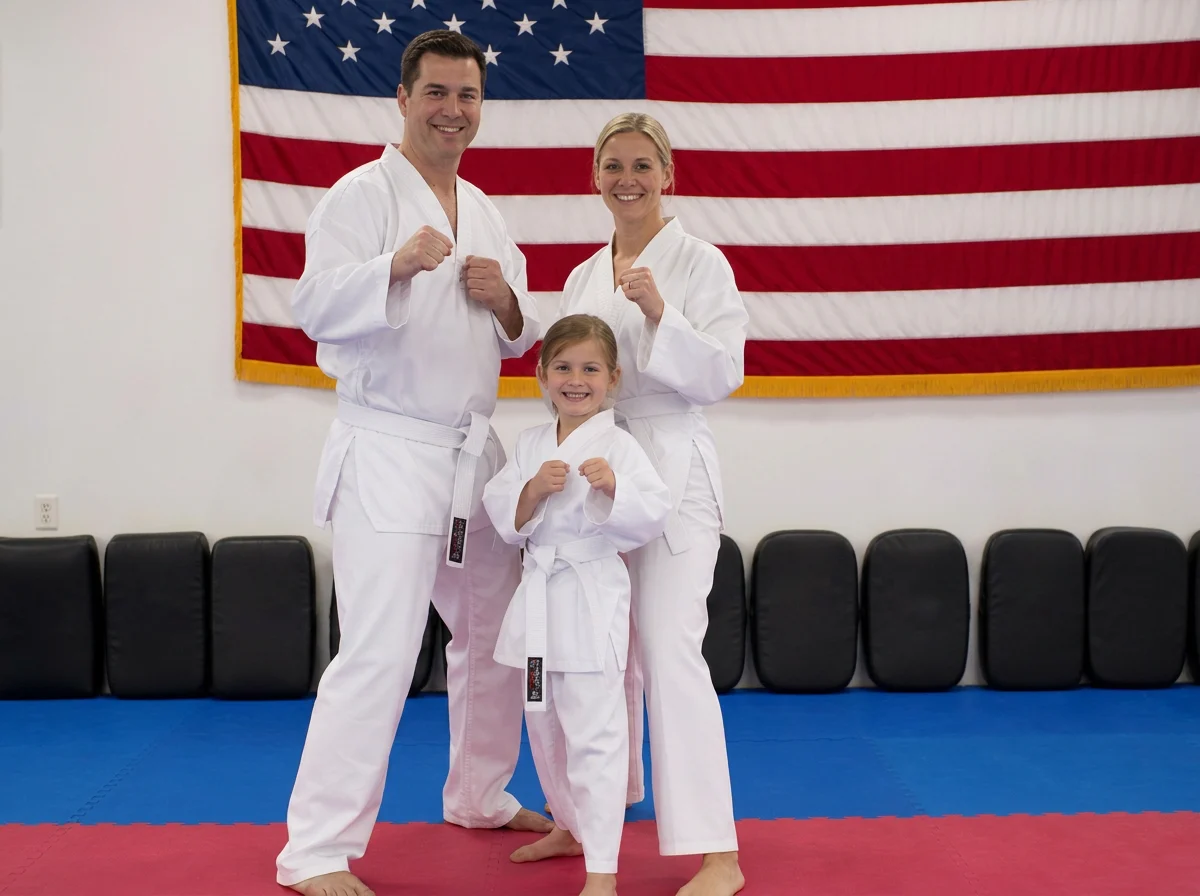
Family martial arts collapses that. Everyone trains in the same room, at the same time, at their own rank. One drive. One night. One shared thing to talk about in the car.
That is the pitch. This article is the honest version, including who should skip it.
What a Family Class Actually Is
A family class is not a watered-down kids class with parents allowed to stand in the back. It is a full traditional Tae Kwon Do class where students of different ages and ranks work the same curriculum at their own level.
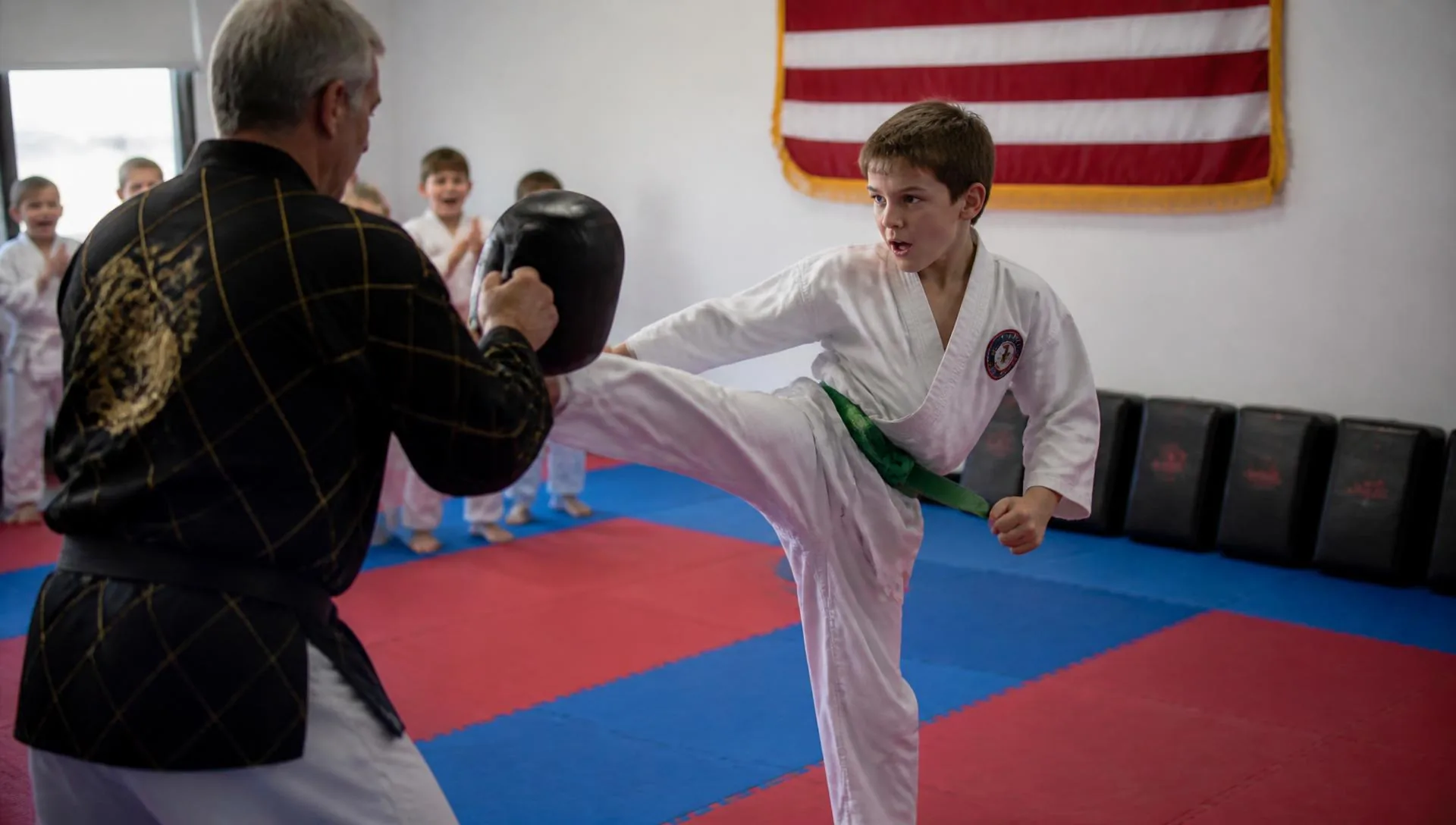
In practice, that means a 9-year-old green belt and their 41-year-old parent, who is a white belt, are in the same warm-up, then split by rank for their own material, then come back together for drills.
The instructor runs the room by rank, not by age. That single detail is what makes mixed-age training work instead of turning into supervised chaos.
Why It Works Better Than Two Separate Programs
The schedule stops fighting you
Two hours a week, one location, everyone in the car at once. Families that would have quit a two-program schedule by February are still training in July.
Your kid sees you be a beginner
This is the underrated part. Children rarely watch a parent be genuinely bad at something and keep going anyway. In a family class, they watch it every week.
A parent who cannot get their form right, gets corrected in front of everyone, and comes back Thursday teaches persistence more convincingly than any lecture about homework.
Practice happens at home without nagging
When two people in the house have a test coming up, the hallway becomes a training floor on its own. Nobody has to be reminded.
It is the same physical benefit adults are paying a gym for
- Cardio that does not feel like cardio, because you are counting instead of watching a clock.
- Balance, hip mobility, and core strength, which is most of what desk work destroys.
- Stress that gets spent instead of carried into the evening.
- A workout you show up to, because your kid is expecting you.
That last line is the one that keeps adults consistent. Skipping the gym costs you nothing. Skipping the class your 8-year-old is dressed for costs you something.
How Mixed Ages Stay Safe
The first worry every parent has is size. An adult and a 10-year-old should not be doing the same partner drill in the same way, and they do not.
The rules that make it work:
- Partner work is assigned by rank and size, not by convenience.
- Contact drills are controlled, with gear, and only at the ranks that have earned them.
- Adults are taught early that a child partner is a responsibility, not a target.
- Instructors move constantly. Nobody is left unwatched in a corner.
Handled correctly, mixed-age training is safer than an all-kids room, because there are more careful bodies on the floor and more eyes on the newest students.
Who Family Classes Work Best For
In our experience, these households thrive:
- Parents with two kids more than three years apart, who are tired of splitting nights.
- An adult who wants to get in shape but will not go to a gym alone.
- A child who is nervous about starting something new and settles faster with a parent on the floor.
- Families who want one activity that does not conflict with school sport seasons.
Adults who come in on their own do well here too. Most of the grown-ups in our room started because a kid did, but plenty walked in without one. What they get is a class of people they already know from the neighborhood, which is a lot less intimidating than a room of strangers.
When It Is the Wrong Call
Pushback is fairer than a sales pitch, so here is the honest list.
- One person was dragged in. If a teenager did not choose it, the family class becomes a weekly argument.
- A parent who cannot resist coaching their own child on the floor. That role belongs to the instructor, and kids feel the difference immediately.
- A parent who bristles at being corrected in front of their kid. Some do. It is worth knowing about yourself before you sign up.
- A child who specifically wants their own thing, separate from family. That is a healthy instinct at certain ages, and the kids class exists for exactly that.
If any of those describe your household, the kids-only program is the better starting point. There is no penalty for switching later.
What About Adults Who Want an Adults-Only Class?
We will be direct. We do not run a separate adults-only class, and we are not going to pretend otherwise on a website.
At a family school, the adult population is mostly parents who train alongside their kids, and splitting that into a second night would mean a half-empty room at a worse time for everyone. The family class is where adults train here, at full curriculum, with real standards.
If you want an adults-only competitive fight gym, we are not that, and we will tell you so on the phone rather than after you enroll.
What It Costs a Family, in Time and in Money
Time is the number that decides whether a family lasts. Two classes a week is about two hours on the floor, plus drive time, which in Urbandale is usually under 15 minutes each way.
The money question is simpler than most families expect, because training together removes duplication:
- One location instead of two, which cuts the driving in half before you count tuition.
- Family rates, so the second and third student are not billed like two separate enrollments.
- Uniforms and gear that get reused as younger siblings grow into the program.
- No equipment arms race. There is no travel team fee, no tournament requirement, and no season that suddenly costs triple.
Ask any school for the whole annual picture before you enroll: tuition, uniform, certification, gear, and events. A school that will only quote a monthly number is hiding the rest of the math.
Also ask about holds. Vacations, illness, a broken wrist, a school sport season that overlaps for eight weeks. Every long-term family uses a hold at some point, and a reasonable policy is a sign that a school expects to keep you for years rather than months.
What the First Month Looks Like for a Parent
- Week one: you will be winded and you will forget the form. Everyone is. Nobody notices.
- Week two: your body hurts in places a treadmill never found. This passes.
- Week three: you stop counting the clock and start counting reps.
- Week four: your child corrects your stance, correctly, and something shifts in how they see themselves.
That fourth week is the moment most parents tell us they understood the point of the whole thing.
Frequently Asked Questions
Do parents and kids have to be the same rank?
No, and they almost never are. Each student advances on their own certification schedule against their own standard.
What if I am out of shape?
Then you are the normal case. Everything scales. Push-ups can be done on your knees, kicks can be waist high, and nobody is timing you against the 20-year-old.
Can one parent and one kid come, instead of the whole family?
Yes. Most families do it that way. The class is built for whoever shows up.
How young can a child be in the family class?
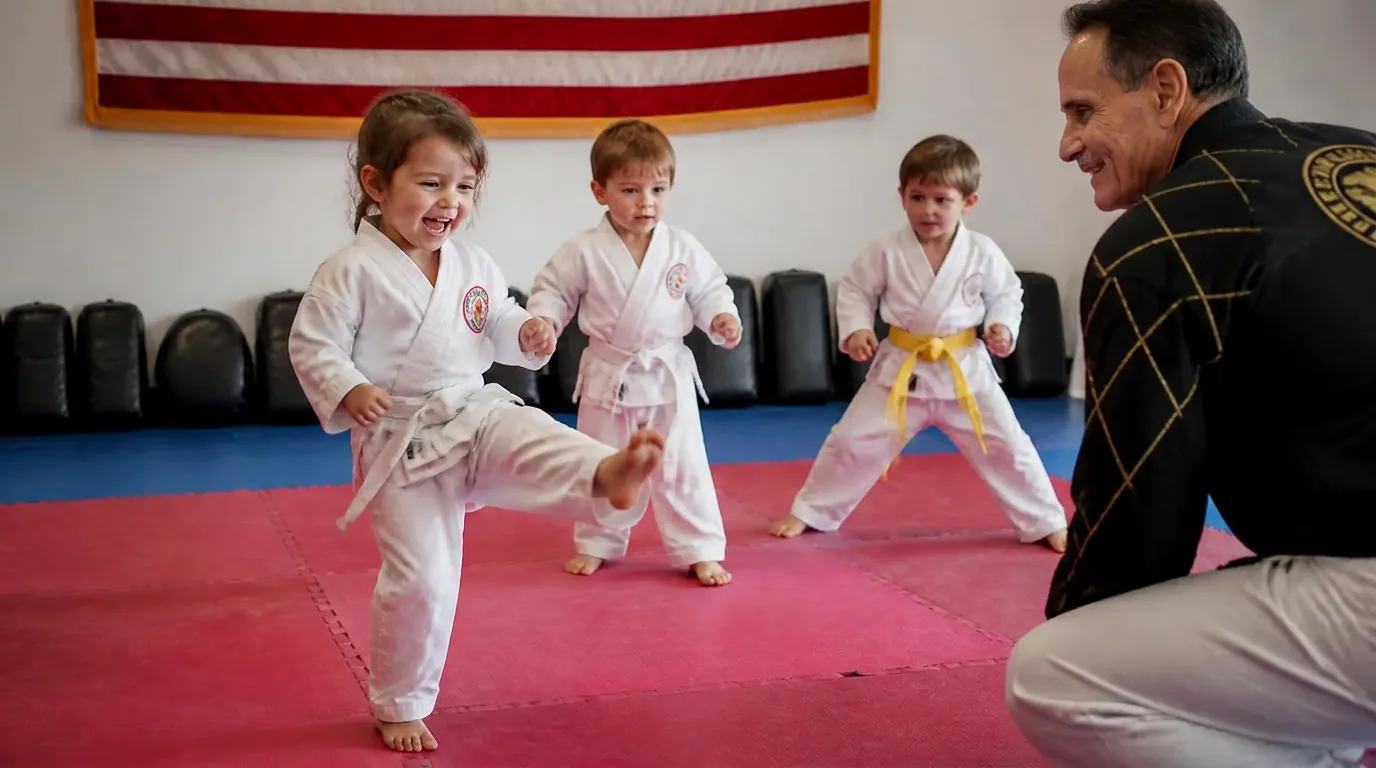
Age 6. Younger children belong in Little Dragons, where the class length and structure match a preschool attention span.
What do we wear to the first class?
Comfortable clothes and bare feet. Uniforms come after you enroll. Ours is a white V-neck pullover with white pants.
Will I hold my child back if I am slower to learn?
No. Ranks are independent, and your child will pass you at some point. Let them enjoy it. It is good for both of you.
Try One Class Together
The decision gets easy after one night on the floor. Watching your kid teach you how to tie a belt is not something a website can talk you into.
Our Free Beginner Kickstart is a private intro lesson plus a first class, by appointment, and you can book it for one person or for the whole household. See the full lineup on the classes page, read our story on the about page, or get in touch and we will find a night that works.
We have been on Dennis Drive in Urbandale since 1970, family owned since 1986. Plenty of the parents on our floor learned here first.
New Student Experience
Ready to See It In Person?
Private Intro Lesson + First Class — Free