Parents ask this question in two different ways. Some are asking whether their 3-year-old is old enough. Others are quietly asking whether their 11-year-old has already missed the window.
Neither worry is right. There is no window. What changes with age is not whether a child can start, it is what a realistic first three months should look like.
This guide breaks it down by stage, with what is genuinely achievable at each one, the readiness signs to look for, and the mistakes that make families quit early.
The Short Answer
Most children can start a structured martial arts program at 3, in a class built for preschoolers. Most can handle a full traditional class by 6. Nobody is too old, and the average adult who starts at 40 tells us within a month that they wish they had started at 30.
The wrong age is not the one you pick. It is the one you keep postponing until the schedule opens up, which it never does.
Ages 3 to 5: Listening Before Kicking
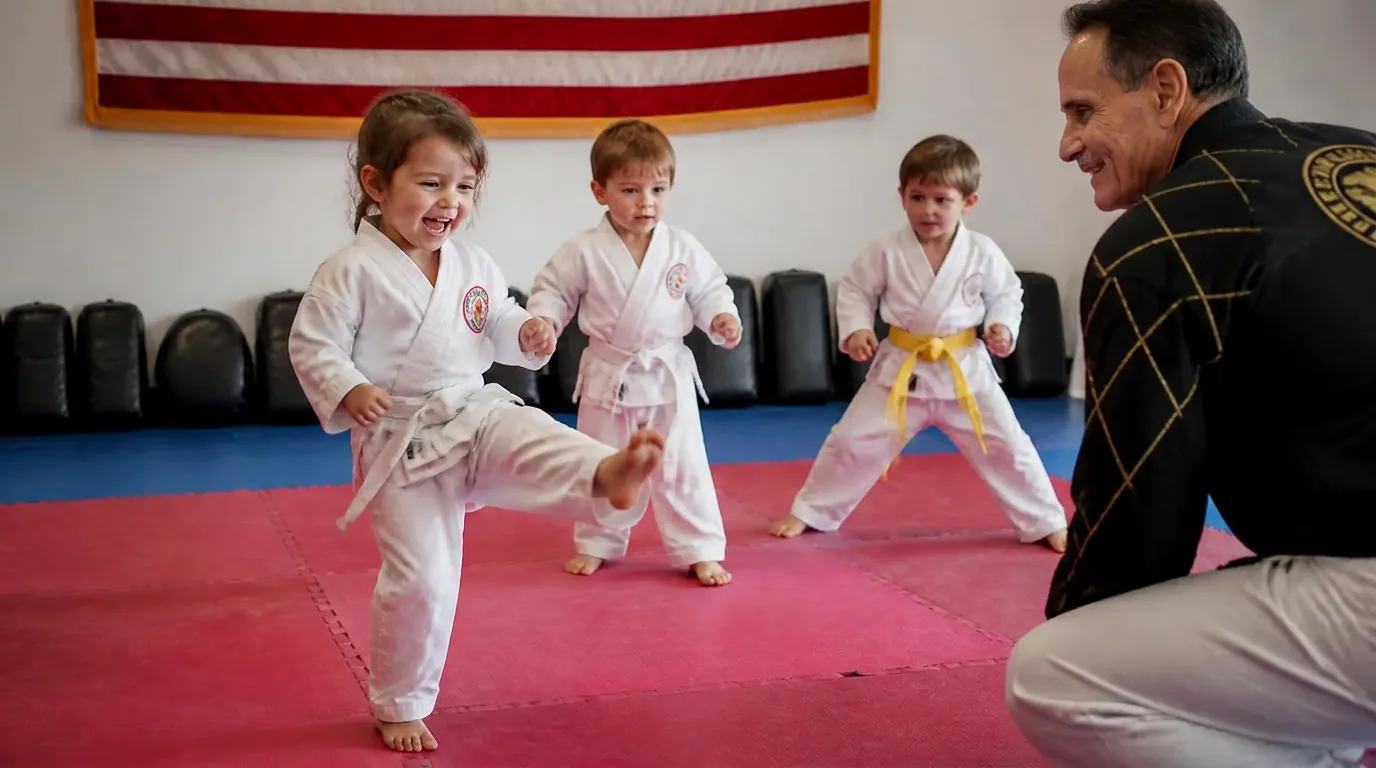
At this age, the martial arts part is almost beside the point. Preschool classes are attention training wearing a uniform.
What is realistic in month one
- Standing on an assigned spot for 20 to 30 seconds without wandering.
- Waiting for a turn instead of pushing to the front of the line.
- Following a two-step instruction, like bow then sit.
- Kicking a target on command, roughly in the right direction.
Notice that none of those are techniques. A 4-year-old who can hold a line and answer to their name has learned the hardest thing in the building.
Signs your preschooler is ready
- They can separate from you for 30 minutes without melting down.
- They follow simple directions from a non-parent adult, like a preschool teacher.
- They can run, jump, and change direction without falling constantly.
If two of those three are true, they are ready. Our Little Dragons classes are built around exactly this stage, in short bursts a preschool attention span can actually hold.
The mistake parents make here
Expecting technique. If you are watching for a crisp front kick at age 4, you will be disappointed and you will pull them out right before the part that matters. Watch for eye contact and turn-taking instead.
Ages 6 to 9: The Sweet Spot
If we had to pick one window where martial arts sticks hardest and transfers fastest to the rest of life, it is this one.
At 6 to 9, kids can memorize a sequence, hold a stance, and understand that a belt is earned rather than given. They are also old enough to feel real pride and young enough that they have not learned to be embarrassed about trying hard.
What is realistic in the first three months
- A full form memorized and performed alone in front of the class.
- Basic blocks and strikes with a name attached to each one.
- A first belt promotion, earned against a written standard.
- Noticeably better behavior at home in the week before a test.
This is the age where the discipline transfer is most obvious. Teachers usually notice before parents do, because school is where the sitting still gets tested.
Signs they are ready
Honestly, at 6 the readiness question is mostly answered. If they are in school full days, they can handle a 45-minute class. The real question is scheduling, not maturity. Our kids martial arts program runs on a belt-rank curriculum built for this age group.
Ages 10 to 12: Skill Gets Real
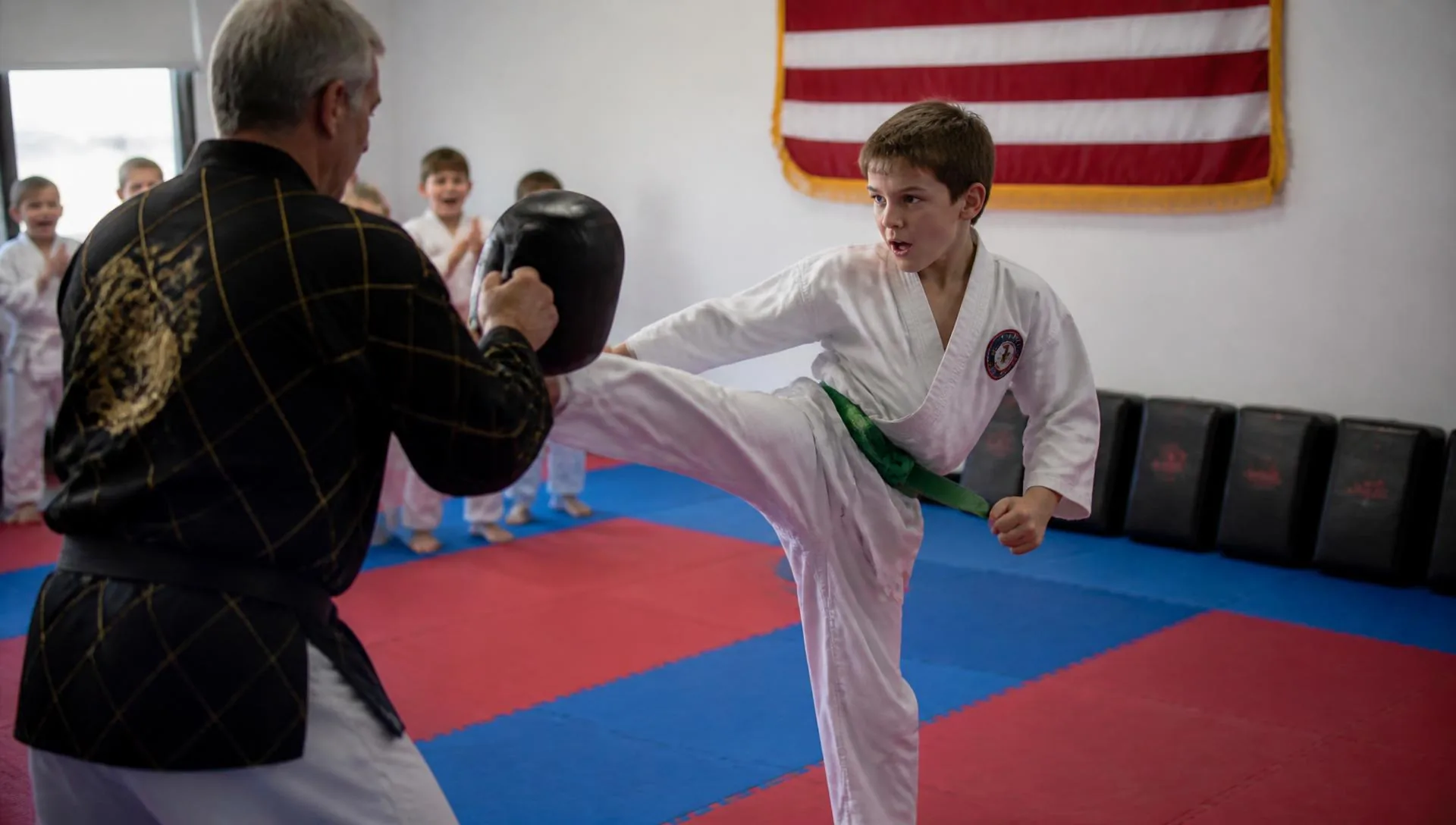
Around 10, kids stop imitating and start understanding. They can explain why a stance is wide, not just copy the shape. Power and speed both jump noticeably.
This is also the age when a lot of kids quit other sports, because playing time gets competitive and the ones who are not naturally gifted get squeezed out. Martial arts does the opposite. Nobody loses mat time to a better athlete.
What to expect
- Real technical progress, visible month over month.
- Sparring with gear, under supervision, for those who want it.
- Leadership moments, like helping a newer or younger student.
- A first honest brush with plateau, and learning to push through it.
That last one is the whole value. A 10-year-old who works through a plateau instead of quitting has learned something no trophy teaches.
Teens: Late Is Not Late
Teenagers who start at 13 or 15 often progress faster than kids who started at 7, because they can process correction quickly and they chose it themselves.
The thing to watch with teens is not ability, it is autonomy. A teen dragged into class by a parent will find a way to be miserable. A teen who chose it will train harder than anyone in the room.
Let them decide, and let the first visit be theirs.
Adults: The Group Nobody Markets To
Most adults who train at Jacobs did not walk in for themselves. They walked in behind a kid, watched from the chairs for a season, then got tired of watching.
Adults are the most anxious beginners we get, and the reason is always the same. They think everyone will be looking at them. Nobody is. Everyone in the room is busy trying not to forget their own form.
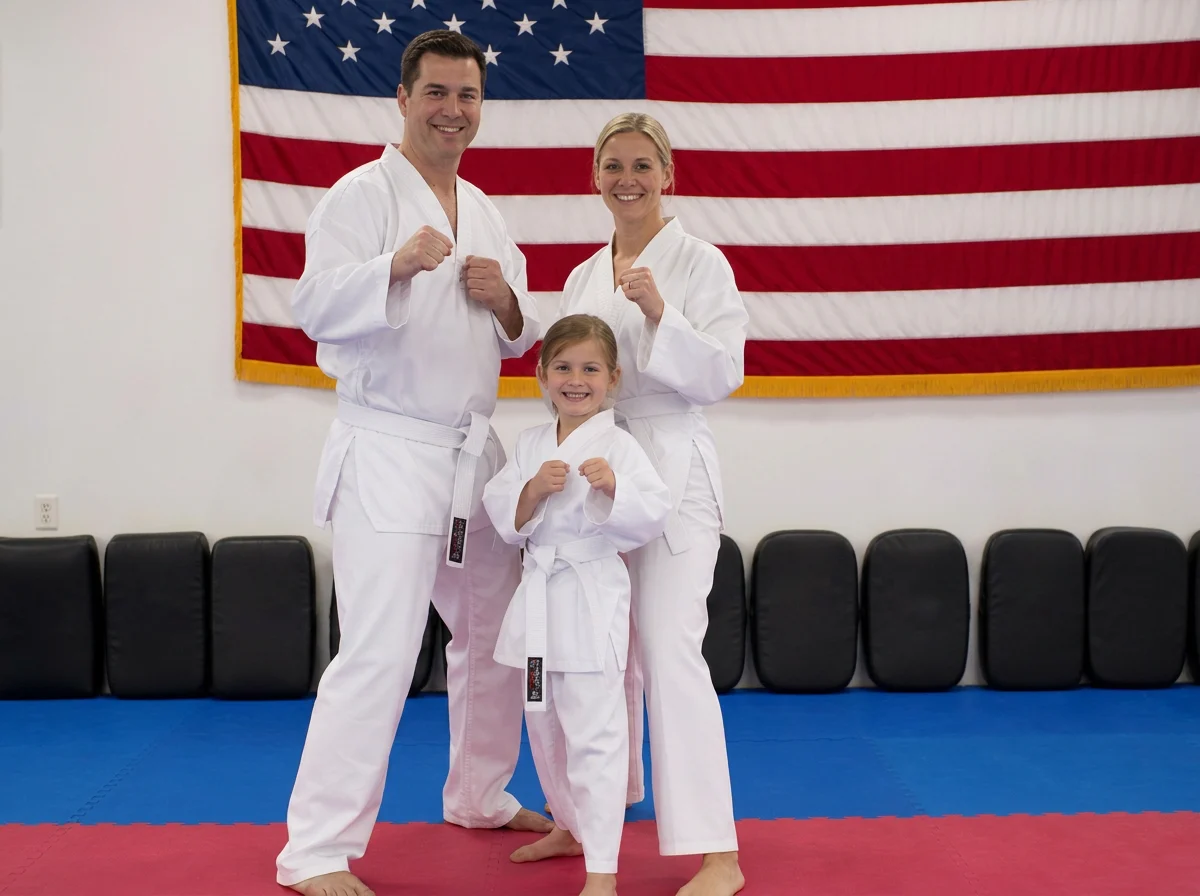
At our school, adults and kids train in the same class at their own rank. That is unusual, and it is deliberate. It turns training into one family calendar entry instead of two. The details are on our family and adult classes page.
What Changes at Home, Stage by Stage
Parents want to know what they will actually notice, and the honest answer is that it looks different at every age. Here is the pattern we see most often in the first three months.
Preschoolers
The change shows up in transitions. Getting shoes on, leaving the park, sitting down for dinner. A child who has practiced stopping on command once or twice a week gets better at stopping everywhere else.
Elementary age
The change shows up in effort. Homework that used to end in tears gets finished, not because it got easier, but because the child has recent proof that hard things end.
Preteens and teens
The change shows up in posture and in how they speak to adults. Teenagers who train tend to stand differently, and coaches and teachers usually mention it before parents do.
Adults
The change shows up in sleep and in patience. Two hours of structured effort a week takes the edge off a job in a way scrolling does not.
None of that happens in week one. All of it is normal by month three if attendance is consistent, which is the only variable that ever really matters.
Signs of Readiness That Apply at Any Age
Age brackets are useful, but they are not the actual test. These are:
- They can take a correction without shutting down. Not gracefully, just without falling apart.
- They can handle 30 to 45 minutes of structure with breaks.
- There is a real reason they are coming, even a small one, that belongs to them.
- The schedule works without wrecking dinner and bedtime one or two nights a week.
That fourth one sinks more families than anything else. Choose a class time you can keep in November, not just the one that sounds good in June.
Frequently Asked Questions
Is 3 too young for martial arts?
Not in a class designed for 3-year-olds. It is absolutely too young for a regular class with 10-year-olds in it, which is why age-specific programs exist.
Is 12 too late to start?
No. A 12-year-old beginner learns faster than a 6-year-old beginner. They will train alongside younger students who outrank them for a while, and almost all of them pass those students within a year.
My child tried a sport and quit. Will this be different?
Often, yes, for one structural reason. In team sports, effort competes with talent for playing time. Here, effort is the only currency, and every student is measured against their own last test.
Can siblings of different ages train together?
Yes, in the family class, at their own ranks. That is the single biggest scheduling relief for parents with kids three or four years apart.
What if my child has ADHD or sensory sensitivities?
Many of our best students do. The predictable structure, the clear expectations, and the constant movement work in their favor. Tell us before the first class so the instructor can plan for it.
Do we have to commit right away?
No. Start with the intro, watch a class, and decide after you have seen the room.
Start Where They Are
Pick the stage your child is in today, set the right expectation for it, and get them on the floor. The perfect age is a myth. The consistent Tuesday is not.
Our Free Beginner Kickstart is a private intro plus a first class, by appointment, so we can place your child in the right group before they ever walk into a full room. See every program on the classes page, or reach out here and we will tell you honestly which one fits.
New Student Experience
Ready to See It In Person?
Private Intro Lesson + First Class — Free