Most parents in Urbandale start looking into martial arts for one of three reasons. A teacher mentioned focus. Something happened at school. Or a kid who used to run everywhere suddenly will not try anything new in front of other people.
Those are all good reasons. The problem is that every martial arts website says the same twelve words about confidence and discipline, and almost none of them tell you what actually happens on a Tuesday night.
This guide does that. It covers what a real class looks like, what changes at home and in what order, what it costs a family in time as well as money, and the questions that separate a serious school from a belt factory. This school has taught families here since 1970 and we have owned it since 1986, so most of this comes from watching a few thousand kids walk through the same door.
What a Kids Martial Arts Class Actually Looks Like
A traditional Tae Kwon Do class for ages 6 to 12 runs about 45 minutes and follows the same shape every time. That repetition is not laziness. Predictable structure is exactly why a distracted kid can settle into it by week three.
Here is the usual arc:
- Line up and bow in. Names are called, attention is expected, class starts on time.
- Warm up and conditioning. Running, jumping, push-ups, stretching. Ten minutes of getting the wiggles out with a purpose.
- Basics. Stances, blocks, punches, kicks, repeated out loud and counted together.
- Combinations. Set sequences of technique the student drills and is evaluated on for their belt rank.
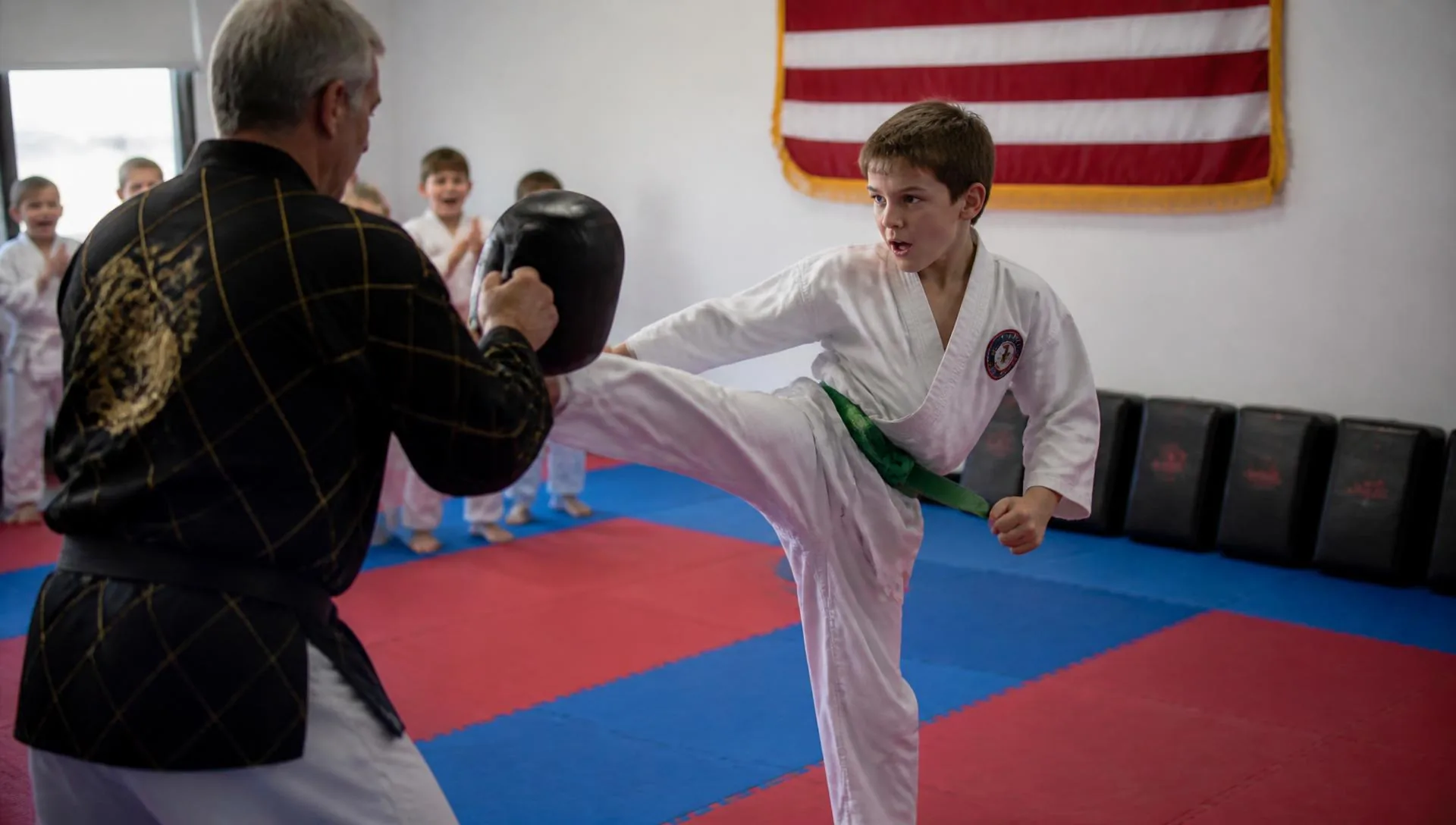
- Drills or partner work. Pads, targets, controlled self-defense, sometimes sparring gear for older ranks.
- Mat chat and bow out. One short lesson about respect, effort, or handling frustration, tied to something real.
Nobody sits on a bench. There is no roster spot to win and nobody gets cut. A child who is having a rough week still gets the same 45 minutes as the kid who nailed everything.
The Three Things That Change First (In This Order)
Parents usually expect the punching to show up first. It does not. Here is the order we see almost every time.
1. Eye contact and answering adults
Within about three weeks, most kids will look an adult in the eye and answer, "Yes sir" or "Yes ma'am," out loud. It sounds small. It is not. It is the first time many children practice speaking up on purpose.
2. Finishing what they started
Belt requirements cannot be skipped and cannot be rushed. A student who wants a yellow belt has to do the repetitions. Around month two, parents start reporting that homework arguments got shorter.
3. Physical confidence
Balance, coordination, and the willingness to try something in front of other people. This is where building confidence stops being a slogan and starts being visible at the dinner table.
Notice what is not on that list. Kids do not become better fighters first. They become better at showing up first, and the skill follows.
Is Martial Arts Safe for a 7-Year-Old?
This is the most common question we get, and it deserves a real answer instead of a reassurance.
Youth martial arts has a lower injury rate than most field sports, because contact is introduced deliberately, in stages, with gear, under supervision. A white belt is not sparring. A white belt is learning how to stand.
What to look for in any school:
- Beginners are not put into contact drills in their first month.
- Protective gear is required once sparring starts, not optional.
- Class size allows an instructor to see every student at once.
- Corrections are given quietly, by name, without humiliation.
- Kids are grouped by rank and size for partner work, not just by age.
If a school cannot explain its progression from no contact to controlled contact in one clear sentence, keep looking.
What It Costs a Urbandale Family (Time and Money)
Money matters, but time is the number that actually decides whether a family sticks with it. Two classes a week for a 7-year-old is roughly two hours on the floor plus drive time. In Urbandale, that is usually under 15 minutes each way.
Budget realistically for these items:
- Monthly tuition, billed month to month or on an agreement.
- A uniform. Ours is a white V-neck pullover with white pants.
- Certification fees when a student is invited to certify for the next rank.
- Sparring gear once a student reaches the ranks that use it.
A school that will not put every one of those numbers in writing before you enroll is telling you something. Ask for the full annual picture, not the monthly headline.
Also ask what happens when life happens. Vacation, illness, a broken arm, a sport season that overlaps. Reasonable schools have a hold policy. If yours does not, that is a fair reason to choose someone else.
Five Questions to Ask Before You Sign Anything
- Who teaches this exact class, and can I meet them today? The person giving the tour is often not the person teaching your child.
- Can we watch a full class first? A school confident in its instruction will invite you to sit through the whole thing.
- What does a belt actually require? If ranks are handed out on a calendar instead of a standard, the belt means nothing.
- What does month six look like? Anybody can run a great trial week. Ask about the part after the excitement fades.
- What are the total costs for a year? Tuition, uniform, certification, gear, events. All of it, on one page.
Bring those five questions to every school you visit, including ours. The honest ones will be glad you asked. You can see how we answer them on our class schedule and program pages or by asking on your first visit.
Red Flags Worth Walking Away From
Some of these are common enough that parents assume they are normal. They are not.
- A multi-year contract pushed on the first visit, with a discount that expires when you leave the building.
- Guaranteed black belt in a fixed number of years, regardless of the student.
- Kids nobody is watching, doing drills in a corner while an instructor talks to parents.
- Belt promotions every six weeks with a fee attached to each one.
- Nobody can tell you the name of the head instructor's own teacher.
Lineage matters more than most parents realize. A school that can trace who taught them is a school that had to meet a standard.
How to Tell If Your Child Is in the Right Program
The honest test is not the belt on the wall. It is whether your kid gets in the car on class night without a negotiation.
Around week six, look for three signs:
- They practice something at home without being asked, even badly, even in the kitchen.
- They can name their instructor and at least one other student.
- They get frustrated at a technique and come back to it anyway.
That third one is the whole point. Martial arts is a controlled way to practice being bad at something in public, then getting better. That transfers to math tests, tryouts, and eventually job interviews.
Where Ages 3 to 5 Fit In
If your child is younger than 6, a full kids class is usually too long and too structured. Preschoolers need shorter classes, more movement, and goals measured in seconds of attention.
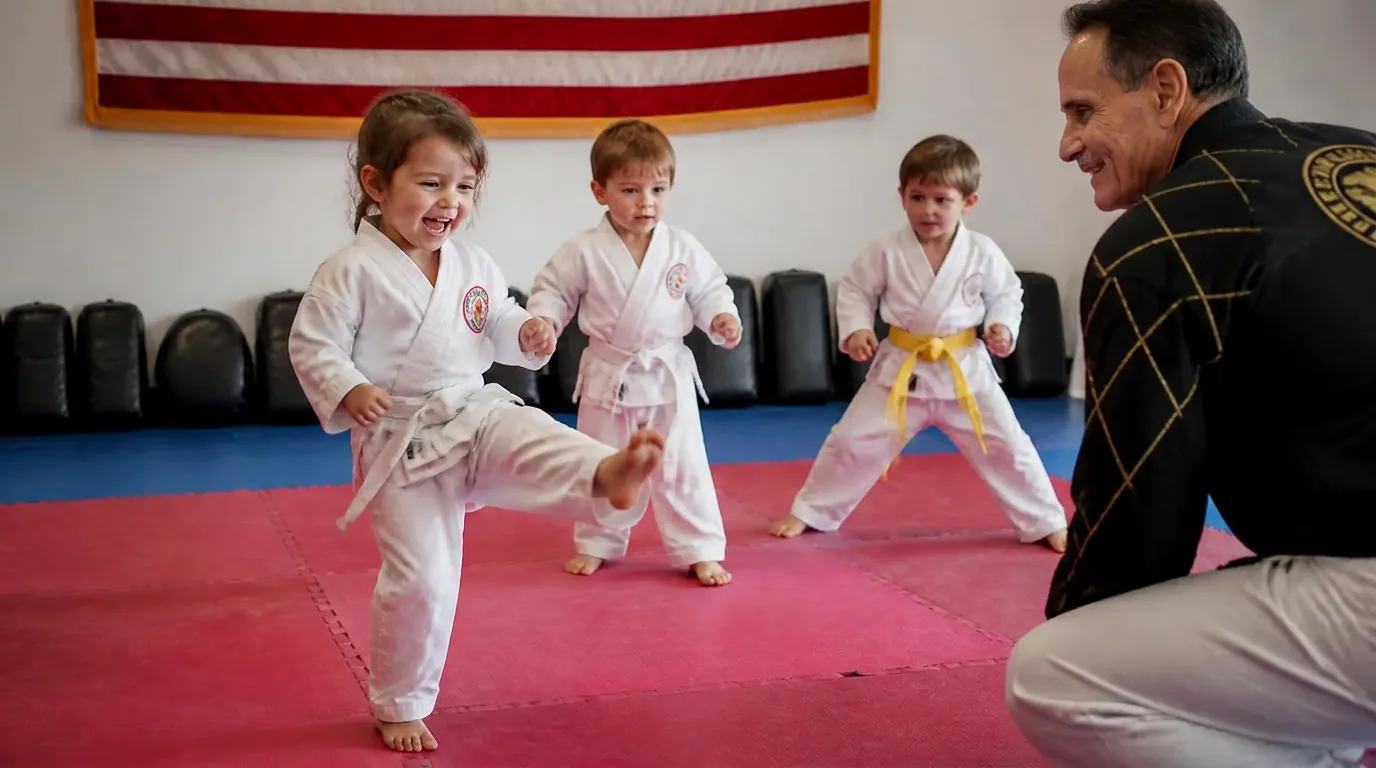
That is what our Little Dragons program is built for. The goals there are listening, taking turns, and standing on a spot without wandering off, all of which make the jump to the 6 to 12 class much easier later.
What About Parents Who Want to Train Too
A lot of adults in Urbandale start because their kid started. They watch from the viewing area for a few months, then decide they are tired of watching.
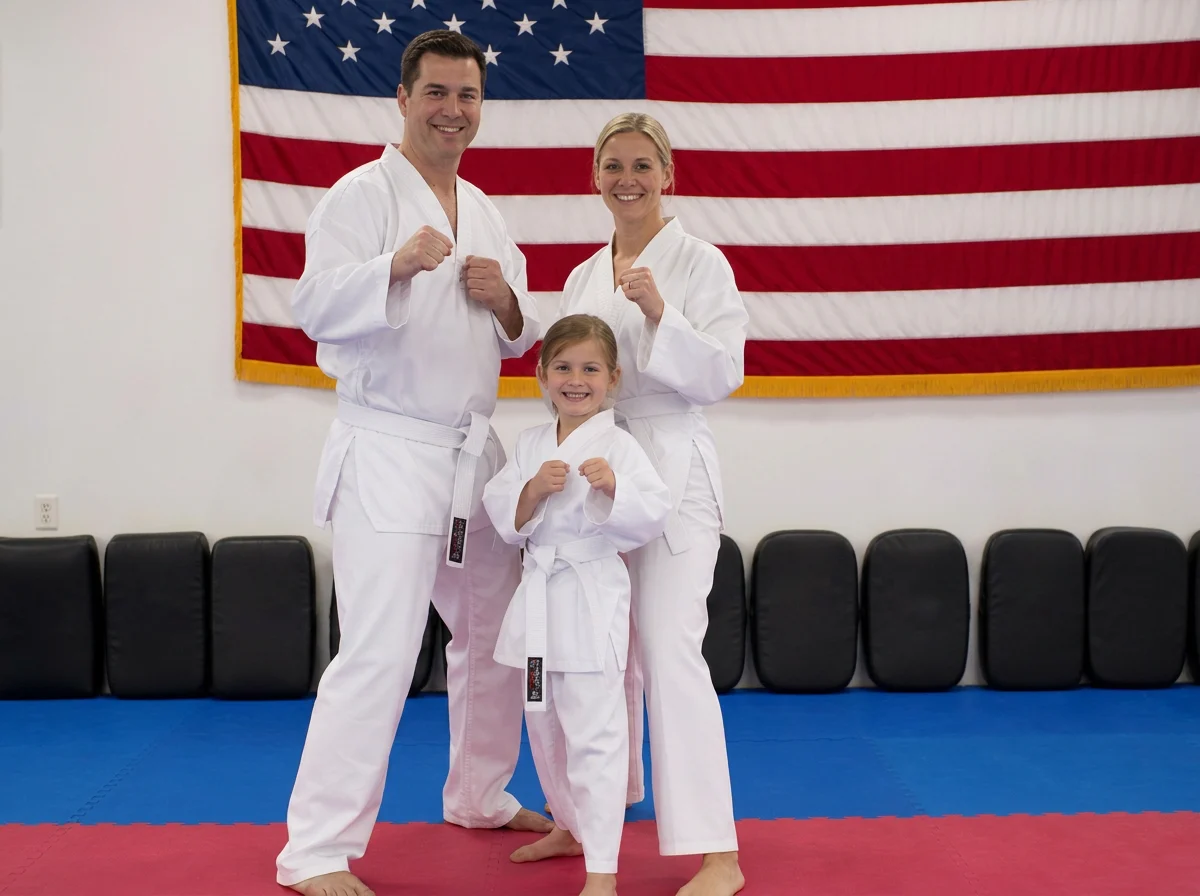
At Jacobs, adults and kids train in the same class at their own rank, which means one drive, one night, and one shared thing to talk about on the way home. Details are on the family and adult classes page.
Frequently Asked Questions
How many classes a week should a beginner take?
Two is the sweet spot. One class a week is enough to enjoy it, but progress is slow enough that kids lose momentum. Three or more is great for students who fall in love with it, but it is not required to advance.
Does my child need to be athletic or coordinated first?
No. The kids who benefit the most are usually the ones who were not naturally athletic, because this is the first activity where they are competing against their own last attempt instead of a teammate.
Will martial arts make my child more aggressive?
The opposite, consistently. Kids who know they can defend themselves have less to prove. Every class ties skill to restraint, and the rule is simple: what you learn here is for the mat and for real danger, nothing else.
What if my child is shy or has been bullied?
That is one of the most common reasons families walk in. Shy kids do well here because nobody is put on the spot in front of a crowd on day one. Confidence gets built in small, private, repeatable wins.
How long until a black belt?
Years, and it should be. Any school that promises a date is selling a belt instead of a skill.
What should my child wear to the first class?
Comfortable clothes they can move in, and bare feet. No uniform needed until they enroll.
The Next Step
You cannot pick a martial arts school from a website, including this one. You pick it by standing in the room, watching a class, and seeing whether your kid leans forward.
Our Free Beginner Kickstart is a private intro lesson plus a first class, by appointment, so a new student is never dropped cold into a room of strangers. If it is not the right fit, we will say so.
Call us, or get in touch here and we will find a time that works. This school has been on Dennis Drive since 1970 and in our family since 1986, and we are still teaching the same families' grandchildren.
New Student Experience
Ready to See It In Person?
Private Intro Lesson + First Class — Free